
Person-centred counselling & psychotherapy in Eastbourne
A more honest conversation
I do not begin with a diagnosis or a fixed idea of what needs to change. I begin with you. Therapy offers a different kind of conversation: honest, attentive and willing to stay with what is difficult, unclear or uncertain.
I'm less interested in giving you answers than in helping you notice what you may already half know. That usually means slowing down, going over the same ground more than once, and not rushing to make things tidy.
Counselling and psychotherapy
in Eastbourne and online across the UK.
What brings you to therapy is rarely simple
Sometimes something identifiable has happened: a relationship has ended, anxiety has become difficult to live with, or the demands of life have begun to feel unsustainable.
At other times, the difficulty is harder to name. You may be functioning reasonably well from the outside while privately feeling overwhelmed, disconnected or exhausted by the effort of holding everything together. You may understand your patterns intellectually but still find yourself repeating them.
You do not need a diagnosis, a crisis or a clear explanation before beginning therapy. Not knowing where to start is itself a possible place to start.

The relationship is not separate from the work
Therapy is not something I do to you. I will not arrive with a predetermined explanation of who you are or prescribe the person you ought to become.
My role is to listen carefully, respond honestly and stay attentive to how you experience your life. Over time, we may notice patterns, contradictions or parts of your experience that have been difficult to approach alone.
A good therapeutic relationship is not one in which we always feel comfortable or agree. There may be moments of challenge, uncertainty or misunderstanding. These can feel uncomfortable, but they do not necessarily mean that something has gone wrong.
What matters is whether we can speak honestly about what is happening between us. Whether you feel able to become more open about how you really experience the world and yourself within it. And whether that openness can be met with empathy, care and honesty.
None of this works if you have to manage how I respond. When you don't have to do that, things that felt fixed can start to move.
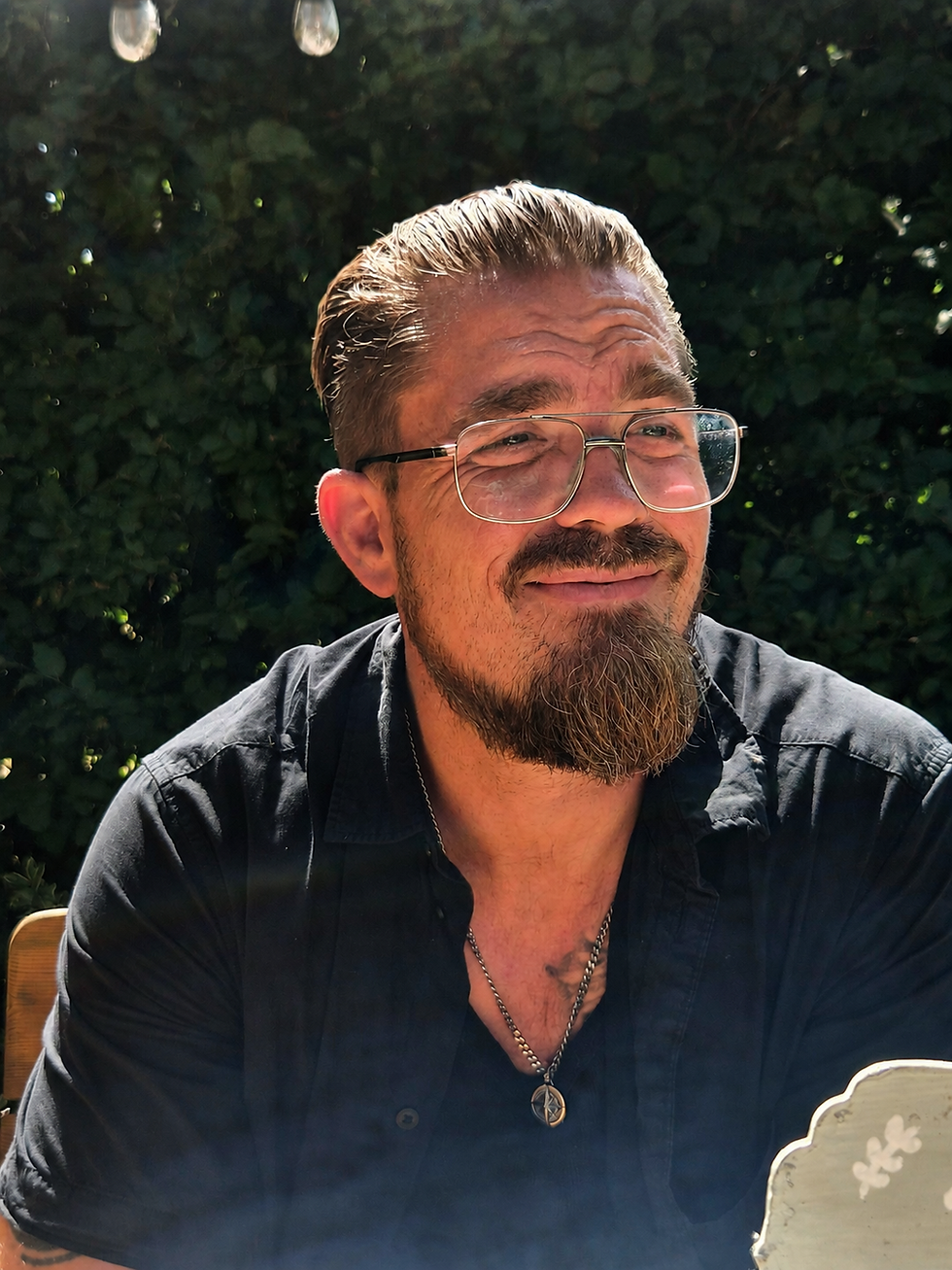
About Me
Experience matters. So does the person.
I have worked as a counsellor and psychotherapist for more than ten years, and have so far completed over 5,000 hours of client work. I graduated with first-class honours in person-centred counselling and, alongside my therapy practice, spent eight years supporting university students with complex mental health difficulties.
My experience is important, as it has put me in contact with an enormous range of people, difficulties and ways of understanding the world. Yet it is far from all that matters. Qualifications and clinical hours cannot tell you what it will actually be like to sit in a room with me, and I think that matters just as much.
I tend to be thoughtful and curious rather than quick to decide what something means. I will take you and what you bring seriously, but I do not believe that therapy needs to feel solemn all the time. There is room for uncertainty, frustration, confusion, and humour, as well as space for the parts of you that may not fit neatly into a professional description of a “problem”.
Most of all, I value kindness and honesty.
WHAT WE MIGHT EXPLORE
People rarely arrive with only one thing going on.
Anxiety may be tangled up with relationships, exhaustion, earlier experiences or a persistent feeling of being somehow different from the people around you. Something that seems to belong entirely to the present may have roots in what has happened before, while difficulties you thought you had learned to live with may become harder to manage when other parts of life feel uncertain.
It can be helpful to have words for what you are experiencing, but people do not fit neatly into categories. You may recognise yourself in several of the areas below, or find that none of them describes your experience particularly well. We can begin with whatever is bringing you to therapy now and take the time to understand what it means to you.
Anxiety & chronic stress
When your mind and body seem unable to stop anticipating what might go wrong.
Burnout & emotional exhaustion
Feeling overwhelmed, depleted or increasingly unable to sustain what life asks of you.
Trauma & earlier experiences
Exploring how experiences from the past may continue to shape how you feel, relate and respond in the present.
Neurodivergence & feeling different
Making sense of your experience without treating difference as something that automatically needs correcting.
Relationships, conflict & tension
Making sense of what happens between you and other people, including unresolved conflict and what may sit beneath the tension.
Identity, self-worth & direction
Questions about who you are, how you see yourself and what you want your life to become.
BEGINNING THERAPY
You do not need to be certain before getting in touch.
Choosing a therapist can be difficult. A website can give you some sense of how I think and work, but it cannot tell either of us whether the relationship will feel right once we meet.
Getting in touch does not require you to commit to ongoing therapy. It simply gives us somewhere to begin.
01 - Make an enquiry
You can contact me briefly to let me know that you are considering therapy and share a little about what has brought you here. You do not need to explain everything or find the right words.
02 - Arrange a first session
Our first session gives us somewhere to begin exploring what has brought you to therapy. It also allows us both to get some sense of what it feels like to speak and work together.
03 - Decide whether to continue
There is no expectation that you must continue simply because we have met. We can speak honestly about whether working together feels useful and, if it does, decide how we would like to continue.
Practical Information
Location
Central Eastbourne, East Sussex, or online across the UK.
Sessions
Sessions usually last 50 minutes. Longer sessions are also available by arrangement.
Fees
£60 for a standard 50-minute session.